What’s really inside that 40ft expandable container house we sell? Let me break it down straight—no fancy jargon, just what I actually use as a supplier who’s built hundreds of these things, and what I’d tell a buddy who’s looking to get one for their property. A lot of buyers see “container house” and think it’s just a repurposed steel box with a couch, but nope, these expandable ones are engineered to hold up way better than old shipping containers, and every material I pick matters for durability, functionality, and that “feels like a real home” vibe. 40ft Expandable Container House

First, the core structure—this is the backbone, so I don’t cut corners here. Unlike static shipping containers, which only hold closed, expandable units have two main steel parts: the fixed base section and the extendable side/end sections. The fixed part is built from 2mm cold-rolled steel I-beams and channel sections, not the thin corrugated steel you see on 20ft shipping containers. Wait, cold-rolled is key here—hot-rolled can warp too easy when we’re expanding and retracting the unit repeatedly, so I stick with that because it’s got higher tensile strength, like 550 MPa minimum, which means it won’t bend even if someone drops a tool or it’s sitting on uneven ground. The extendable panels? 1.8mm galvanized steel, pre-painted with a zinc-rich primer that stops rust before it starts, then a layer of matte white acrylic topcoat because white reflects sun, keeps the inside cooler in summer. I also add a set of heavy-duty locking pins for the expansion joints—each pin is 16mm stainless steel, not regular steel, because stainless doesn’t seize up when it rains or gets dusty. That small detail has saved me so many service calls, let me tell you. A lot of cheap suppliers use regular steel pins, and within a year they’re rusted solid and you can’t expand the unit without a sledgehammer. Not my problem.
Next up, the floor—you can’t have a decent home with a floor that feels like a metal sheet. The base floor of the fixed section is a composite steel-aluminum panel, not just plywood on top of steel. Wait, it’s a 12mm OSB (oriented strand board) core sandwiched between two 1mm aluminum sheets, bonded with waterproof epoxy resin. That combo is way stronger than regular plywood, doesn’t warp if it gets a little damp, and feels soft under bare feet, not cold. For the extendable floor panels? I use 15mm marine-grade plywood, coated with a heavy-duty polyurethane sealant, with 1mm anti-slip vinyl flooring on top. Marine-grade is non-negotiable here—it’s treated with preservatives that resist rot from moisture, so if the unit is sitting outside in a rainy area, the floor doesn’t turn to mush. I also add 50mm of rigid polyurethane foam insulation under the entire floor, between the steel beams. That’s not just for warmth in winter—it stops the floor from sweating when the ground is cold and the inside is warm, so no mold growing under there.
Walls and ceiling—most people focus on insulation here, but the inner and outer finishes matter too. The outer wall layer (besides the steel) is the same acrylic-coated steel I mentioned earlier, but the inner wall is 12mm gypsum board, because it’s smooth, easy to hang pictures on, and doesn’t off-gas like some particleboard. Wait, the insulation between inner and outer walls? 100mm closed-cell polyurethane foam, not fiberglass. Closed-cell is way denser—R-value of about 4.5 per inch, so 100mm is like R-18, which is better than most standard home insulation, and it doesn’t absorb water if there’s a leak. Fiberglass would get soggy and lose its insulation value within a month, so no thanks. For the ceiling, it’s a 12mm gypsum board with a suspended metal grid, plus another 80mm of closed-cell foam on top, because heat rises, so the ceiling needs extra insulation. I also line the inside of all expandable moving parts with a 3mm rubber mat to prevent metal-on-metal noise when you’re expanding or retracting the unit—no more loud clanks that wake you up at 2 a.m.
Windows and doors—these are the parts that make the unit feel like a home, not a box, and I pick materials that are weatherproof and energy-efficient, not the cheap plastic ones that crack in a year. The windows are double-glazed tempered glass, 5mm panes each, with a 12mm argon gas gap in between. Argon is inert, so it doesn’t conduct heat like air, so it cuts down on heating and cooling costs. The frames are aluminum, not PVC—aluminum is way stronger, doesn’t yellow, and can handle temperature swings way better. I add a rubber seal around every window frame, EPDM rubber, which is the same stuff used on truck roofs—doesn’t dry out or crack for 20+ years. Doors: the main entry door is a 40mm thick solid-core steel door with a fire-rated core, and it’s pre-hung in a steel frame, so it doesn’t warp. The interior doors? Hollow-core wood composite, not real wood, because real wood expands and contracts with humidity, but composite stays flat. All doors have brass hinges, not plastic, because they last longer and don’t squeak.
Plumbing and electrical—this is where a lot of suppliers skip steps, but I know buyers want to use these units as homes, not just storage, so I get the stuff that’s up to code. Plumbing pipes: I use PEX pipes, not copper or PVC. PEX is flexible, so it doesn’t crack if the unit is moved (wait, these units are transportable, right? Even though they’re expandable, a lot of clients move them to a new site later, so flex is key) and it’s resistant to freezing, so if it gets below 0°C, the pipes won’t burst. All plumbing fittings are brass, no plastic adapters that break. Electrical: The wiring is 12-gauge copper, which is standard for home use, no thin aluminum wiring that overheats. The breaker panel is a 12-circuit mini panel, compliant with international electrical codes, with GFCI outlets in the bathroom and kitchen, obviously—you can’t have a home without those. I also run a 1.5-inch PVC conduit along the base of all walls for future wiring if someone wants to add a TV or extra lights, so they don’t have to cut into the walls later. For lighting, I install LED recessed lights, 10W each, which use way less power than incandescents and last 10+ years.
Roof—wait, the roof is on the top, and a lot of expandable units have flat roofs that leak. My roof is a 2mm EPDM rubber membrane, rolled on and bonded with adhesive, not the thin asphalt shingles you’d put on a regular shed. EPDM is UV-resistant, lasts 25+ years, and is completely waterproof, even if there’s standing water (it’s puncture-resistant too, so if a branch falls, it doesn’t tear). Under the EPDM, I add 75mm of rigid polyisocyanurate insulation, which is even more dense than polyurethane, so the roof doesn’t get hot in the summer. I also add 50mm of gutter along the edges, made of galvanized steel, with downspouts that go to a rain barrel connection point—clients can hook up gutters to collect rainwater for gardens, which is a nice extra.
Wait, what about the seals and moving parts? The expandable sections slide on a set of heavy-duty linear guide rails, made of hardened steel, with self-lubricating Teflon strips—so you don’t have to grease them every month. That’s another thing cheap suppliers skip, so their units jam up after a few expansions. I also add a weather seal around the entire perimeter when the unit is expanded— it’s a closed-cell EPDM foam seal, so no air leaks, no rain getting in, and it makes the inside quiet, like a regular home.
Now, let’s talk about the extras that make this worth it, not just the bare bones. The interior walls and ceilings are pre-painted with low-VOC latex paint, so no weird chemical smell when you first get the unit—you can move in day one, no waiting. The kitchen cabinets? Melamine-coated particleboard, which is water-resistant, with soft-close hinges, so no slamming doors. The countertops are 12mm quartz, not laminate—laminate scratches easy, quartz is stain-resistant, lasts forever. The bathroom has a 100mm fiberglass shower pan, pre-sealed, so no leaks there, and a porcelain toilet with a low-flow flush, which saves water.
Wait, let’s be real—this is a 40ft expandable unit, right? So when it’s closed, it’s like a standard 40ft container, so it’s easy to ship, but when you expand the sides and ends, you get like 200-240 sq ft of living space, depending on the model. But all those materials add up to that space being usable, not just a cramped box. A lot of people ask me why my prices are a little higher than the “bargain” suppliers, and it’s because I don’t use 1mm steel when I should use 1.8mm, I don’t use fiberglass insulation when closed-cell works, I don’t use plastic pins that rust. I build these like I’d want to live in one myself, because a lot of my clients are doing exactly that—retirees using these as a small home, people using them as guest houses or office spaces, even small families as extra housing.
If you’re shopping around, check the specs. Ask what steel thickness they use, what insulation material, what kind of windows. If a supplier says “we use shipping container walls” and their floor is plywood with no seal, run the other way. Those units fall apart in 2-3 years, and you’ll be spending more on repairs than you saved upfront. My units have a 10-year structural warranty, and 5-year warranty on all mechanical parts, because I trust the materials I use.
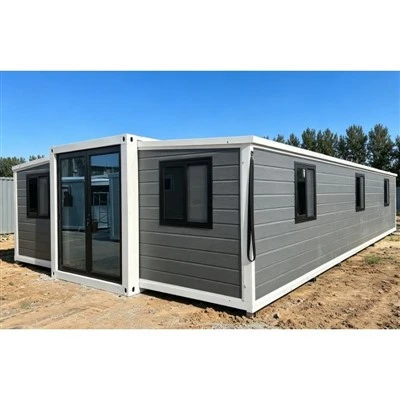
Now, if you’re thinking about ordering one—whether it’s for a small home, a guest house, a temporary office, or a rental property—hit me up. I can send you detailed specs, 3D renderings of how it looks expanded, and even references from past clients. We ship worldwide, and I can customize the layout too—if you want an extra window in the kitchen, or a bigger bathroom, just say the word. No hidden fees, no fine print, just a solid, well-built expandable container house that feels like a real home, not a modified shipping box.
X-folding Container House References:
- American Society of Heating, Refrigerating and Air-Conditioning Engineers (ASHRAE) Handbook – Fundamentals, 2021
- International Residential Code (IRC) for Structural Steel, 2022
- Steel Construction Institute. Cold-Rolled Steel Design Manual, 2020
- EPDM Roofing Association. EPDM Membrane Performance Standards, 2019
- National Electrical Manufacturers Association (NEMA). Standards for Electrical Wiring Systems, 2021
Tangshan Jingrong Trading Co., Limited
With abundant experience, we are one of the most professional 40ft expandable container house manufacturers and suppliers in China. Please feel free to wholesale customized 40ft expandable container house made in China here from our factory. For price consultation, contact us.
Address: Room 1103, Tangshan Rongtong Building, Lubei District, Tangshan City, Hebei Province.
E-mail: Linda@tscontainerhouse.com
WebSite: https://www.tscontainerhouse.com/
