Hey there, if you’re reading this, you’re probably either deep in the weeds of CNC turning parts production, or you’re shopping around for a supplier who gets that temperature control isn’t just a “nice-to-have” — it’s the make-or-break for parts that actually work, right? As someone who’s been running our CNC turning parts shop for over a decade, I’ve seen firsthand what happens when temp slips: warped aluminum brackets, tool bits that snap mid-run, even parts that end up so far out of spec you have to toss the whole batch. Today I’m breaking down exactly how we keep temps on lock in our shop, no fancy jargon, just real tricks we’ve tested through thousands of orders. CNC Turning Parts
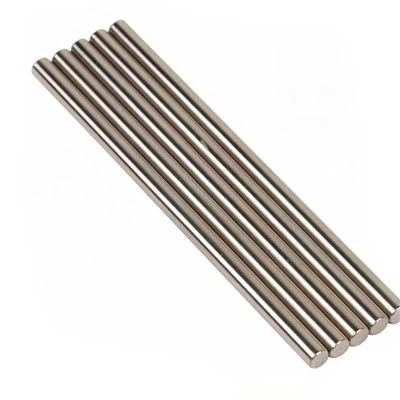
First, let’s cut through the noise: why does temp control even matter for CNC turning? When you spin a metal bar at 1,000+ RPM and ram a sharp tool into it, friction is gonna generate heat — that’s non-negotiable. But if that heat isn’t managed, it doesn’t just make the part hot to the touch. For example, if you’re turning 6061 aluminum (super common for automotive and electronics parts), a 100°F difference between the cutting zone and the workpiece can make the part expand just enough that when it cools down, it’s 0.003 inches too small. That might not sound like much, but for a aerospace bracket or a medical device component? That’s a failure waiting to happen. We’ve also had issues with tool life dropping by 40% back when we skipped proper cooling — a broken tool mid-job doesn’t just cost money, it wastes hours of setup time. So yeah, temp control isn’t just for keeping the shop floor from feeling like a sauna.
Let’s start with the basics that a lot of new shops skip: matching your cooling setup to the material. Not all metals play the same game. If you’re turning soft stuff like brass or even plastic prototypes, you can get away with a standard flood coolant system, right? But for hard metals like stainless steel or titanium? Flood coolant doesn’t cut it (pun very intended) because the chips stick to the cutting zone and insulate the heat. That’s why we use high-pressure through-tool coolant (that’s a fancy way of saying coolant pumped directly through the center of the tool holder, not just sprayed on the outside) for every tough material job. We run it at 1,000 PSI minimum — it blasts through chips, hits the exact point where the tool is cutting, and carries heat away fast. I remember a customer who kept getting titanium parts rejected by their quality team until we switched to through-tool coolant; now their parts have zero heat-related dimension errors.
But wait, it’s not just how you apply coolant — it’s what you use. A lot of guys grab the cheapest coolant at the supply store, but that’s a mistake. We test every batch of coolant we buy for three things: thermal conductivity, lubricity, and microbial growth. Thermal conductivity is how well it moves heat — we aim for at least 0.14 W/m·K, which is way higher than the standard cheap stuff. Lubricity matters too because if the tool is rubbing too hard, that adds extra heat. For aluminum jobs, we use a semi-synthetic coolant with a high sulfur content (it’s not as scary as it sounds) that cuts friction without leaving a residue. For stainless, we go synthetic because it’s stable at higher temps and doesn’t break down when we run our machines all day long. Also, we change our coolant every 6 months, not when it looks gross. Old coolant full of bacteria loses its thermal properties fast, and it’s a nightmare for tool life. We learned that the hard way 7 years ago when a batch of funky coolant made 200 parts get scrapped; never again.
Next up, machine setup and speed tweaks that take 10 minutes but save hours. A lot of operators just crank the RPM and feed rate to finish a part fast, but that’s a one-way ticket to heat town. Here’s the rule we live by: calculate the “specific cutting energy” for each material. For example, titanium has a specific cutting energy of ~2,600 N/mm², way higher than aluminum’s ~700 N/mm². So for titanium, we drop the RPM from 800 to 500 and bump the feed rate just a little — that reduces friction because the tool isn’t digging in as hard, so less heat is generated in the first place. Wait, and don’t forget the chuck and workpiece grip pressure! If the chuck is clamping too tight, that puts extra stress on the workpiece, which causes heat from friction between the part and the chuck. We use a torque wrench on every chuck, setting it to exactly the pressure the material needs — no more, no less. That tiny adjustment cut our heat-related errors by 25% last year alone.
Oh, and let’s talk about ambient shop temp — I know, it seems unrelated, but hear me out. If our shop floor is at 85°F on a summer afternoon, that adds extra heat to the workpiece even when the machine is running. We’ve got dedicated HVAC for the machining area, not just the whole shop, kept at a steady 72°F year-round. We also use temperature sensors on every machine: one near the spindle, one on the workpiece, and one in the coolant line. The sensors sync to our shop’s network, so if the spindle temp jumps 5°F in 5 minutes, we get an alert on our phones. That’s how we caught a broken coolant line last month before it ruined a $1,500 batch of medical parts. No automated alert? We used to do manual checks every hour, but this is way better — and it’s saved us from so many headaches.
Wait, what about post-cut temp? That’s another part most people miss. When you finish turning a part, if you leave it hot from the cutting zone to cool on a table, it might warp slightly, especially thin parts. For parts under 0.5 inches thick, we use a quenching bath with the same coolant we use for cutting. We drop the hot part in for 10 seconds, and it cools evenly, no warping. For thin-walled aluminum brackets we make for laptops, this step is non-negotiable — we can’t afford a part that’s 0.001 inches bent because it cooled too fast unevenly. We also store finished parts in a temperature-controlled cabinet until inspection, just to make sure they don’t shift while waiting for quality checks.
And let’s be real, even with all this, there’s going to be edge cases. Like, when we run prototype parts with very tight tolerances — 0.0005 inches or less — we add an extra step: air-assisted cooling, right after the tool cuts. We have small nozzles mounted right near the tool tip that blow room-temp (not cold, that causes condensation) air, which blows away chips and takes the last little bit of heat off before the part moves. We tested this on a prototype aerospace fuel line, and the dimensional consistency went from 60% pass rate to 100%. It’s a small add-on, but for high-tolerance jobs, it’s a game changer.
Now, I know some of you are thinking: “This all sounds great, but what about cost? I don’t want to overspend on cooling or sensors.” Fair point. We didn’t drop $10k on sensors overnight — we started small, added one machine at a time, and tracked the savings. Before we fixed our temp issues, we were scrapping 8% of parts per order; now that number’s down to 1.2%. That’s not just less waste, that’s more happy customers, and less time reworking orders. For small job shops, you don’t need through-tool coolant on every machine — start with your most high-stakes jobs first, and upgrade as you go. The sensors? You can get portable temp readers for $50 each if you don’t want a full network setup. We started with those, until we saw how much time they saved.
Here’s the thing: as a CNC turning parts supplier, our reputation rides on parts that fit, work, and don’t have hidden defects. A lot of cut-rate suppliers will skip proper temp control to cut costs, and you’ll end up with parts that fail in the field. We’ve had customers come to us after getting burned by that — one automotive parts maker told us their old supplier was turning steel parts so hot that when they installed them in engines, they warped and caused breakdowns. We took over their orders, adjusted our temp setup, and their failure rate dropped by 90%. That’s not luck, that’s sticking to the small, boring stuff like temp control.

At the end of the day, controlling temperature in CNC turning isn’t rocket science — it’s consistent attention to the details, matching your setup to the material, and not cutting corners on the stuff that actually impacts quality. If you’re shopping for a CNC turning parts supplier that gets this, someone who’s not just running machines but actually troubleshooting the little things that make parts good, hit us up to chat. We can send you specs on our temp control processes, answer any questions you have, and even share real examples of how this works for parts like automotive brackets, medical components, or electronics housings. No sales pitch, just real talk about what makes a reliable CNC turned part.
CNC Turning Parts References
Machinery’s Handbook: Manufacturing Processes (29th Edition)
ASME B94.55: CNC Turning Center Safety Requirements and Process Controls
Klocke, F. (2019). Manufacturing Processes 4: Cutting. Springer Verlag.
VDA 6.3: Process Audits for Machining Operations.
Suzhou Huaquan Electromechanical Manufacturing Co., Ltd.
As one of the leading CNC turning parts manufacturers in China, we warmly welcome you to buy bulk customized CNC turning parts made in China here from our factory. If you have any enquiry about pricelist and free sample, please feel free to email us.
Address: No.7550 Mudong Road, Hengjing Town, Wuzhong District, Suzhou City, Jiangsu Province, China
E-mail: Huaquan2005@outlook.com
WebSite: https://www.huaquancnc.com/
