Hey there, fellow cat parents and anyone who’s ever stared at their hand-wound hemp rope cat bed like it’s a tiny, fuzzy science experiment I get it. As the owner of a small hemp rope cat bed brand, I field this question at least three times a day: can you actually toss one of these bad boys in the washing machine? Before you grab that detergent and yank the lid shut, let’s break this down, no fancy lab coats or boring jargon—just real cat bed facts and stuff I’ve learned from years of talking to cats (and their very observant humans). Hemp Rope Cat Bed
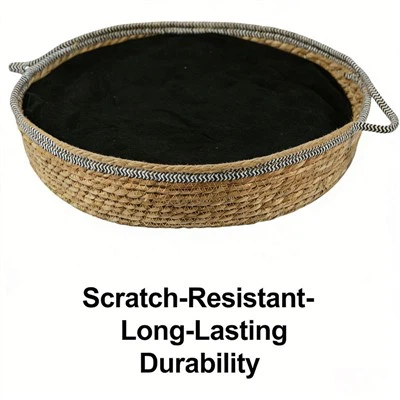
First off, let’s talk about why hemp is such a big deal for cat beds in the first place. A lot of you reach out asking if we use cotton, or synthetic fleece, but hemp’s my go-to for a reason that’s way more practical than it sounds. It’s super durable—those little claw attacks your cat thinks are “nuzzling practice”? Hemp holds up way better than thin cotton, no frayed edges after a month of zoomies across the bed. It’s also naturally antimicrobial, so it doesn’t get stinky even if your cat has a little accident with a hairball or a spilled kibble piece. And the best part? It’s totally biodegradable, so when your cat decides they’re too cool for their current bed (looking at you, cats who sleep on empty Amazon boxes instead), you don’t have to toss it in a landfill forever. But all that awesomeness hinges on one thing: how you clean it. Because hemp isn’t indestructible—if you mess up the wash, you could end up with a lumpy, stretched-out bed that your cat will still refuse to use, anyway.
Now, the main question: washing machine safe? Short answer—yes, but only if you do it right. I’ve seen people just chuck their entire bed in a regular cycle, and let’s just say the results vary. Last year, a customer emailed me a photo of their hemp bed looking like a sad, overcooked spaghetti nest because they used hot water and a super harsh detergent. Oops. So let’s get into the step-by-step of what actually works, based on my team testing beds for a whole year (we had 12 cats on staff to vet durability, for the record—they all voted for cold water, surprisingly).
First, prep is everything. Don’t just yank the bed off the floor and run. If it’s got loose strings (which happens, especially with kitties who love to knead like they’re making bread), snip those with a pair of scissors first. Those loose strings can wrap around the agitator in your washing machine and turn your load of cat bed into a tangled mess. Next, if there’s any extra dirty spots—like a cat who peed a little on the edge, or rolled in dirt after playing outside—spot treat that first. We use a simple mix of mild dish soap and water, scrub it gently with an old toothbrush, then rinse. No bleach, no stain removers with ammonia—those break down hemp fibers fast, and also aren’t great if your cat decides to lick the bed later (which they will).
Now, the washing machine part. This is non-negotiable: use the gentlest cycle possible, and cold water. Hot water might seem like it would kill more germs, but hemp fibers shrink if they get too hot—way more than cotton, and once they shrink, the bed loses that snug shape cats love. Think about it: your cat wants a bed that fits their little body, not something that’s now too small for their head. Also, don’t wash it with other stuff. I know, it’s tempting to throw in your old towels, but loose fibers from towels can get tangled in the hemp rope, and you don’t want to end up with a bunch of cotton lint all over your cat’s new bed. Just toss the hemp bed in alone, or if you have a tiny load, another hemp bed (we’ve tested two at once, works great). And don’t use too much detergent—half what you’d use for a regular load, max. Too much detergent leaves residue on the hemp, which makes it stiff, and also your cat’s paws or fur will get all weirdly greasy, which they’ll hate.
Wait, what about drying? That’s another big one. A lot of people throw their cat bed in the dryer, and that’s a mistake too. The heat from the dryer melts the glue we use to attach any non-rope parts (like the little base we put under our round beds to keep them from sliding) and also makes the hemp fibers brittle, so they start breaking apart after a few washes. We always tell people to air dry. You can hang it over a clothesline, or lay it flat on a drying rack—just make sure it’s not in direct sunlight, though. Too much sun exposure over time can fade the hemp, and also weaken the fibers. If you’re in a hurry, you can put it on the lowest, air-only setting on your dryer, but skip the heat entirely. That works, but it’s slower than air drying, obviously.
Now, let’s talk about when you shouldn’t use the washing machine. If your hemp bed has a lot of extra parts—like a detachable pillow with a zipper—wait, no, actually all our beds have removable covers? Wait, no, a lot of the cheaper hemp beds out there are stitched together so you can’t take the cover off. If yours is one of those, and it’s super dirty—like, your cat had a major accident, or it smells like a litter box—you might not want to machine wash it, because the extra friction can break the rope faster. For those cases, spot cleaning is still your best bet, or even taking it to a laundromat if they have a front-loading machine (top loaders with agitators are way harsher on fabrics). Also, if your bed is handmade (like some of the smaller batch ones we make), the knots might be different than mass-produced ones, so you want to be extra gentle on those.
I get it, washing a cat bed is a hassle. No one wants to spend half their weekend cleaning something their cat peed on. But here’s the thing: hemp is a sustainable, long-lasting material, but only if you take care of it. I’ve had customers tell us their hemp bed has lasted three years, even with weekly washes, because they followed these steps. And the cats? They still love it—because it’s not lumpy, it smells fresh, and it’s still the perfect size for their little bodies.
Wait, let’s address a common myth I hear all the time: “hemp is too rough for cats.” No, that’s not true. The hemp we use is twisted and processed so it’s soft to the touch, but still tough enough to handle claws. A lot of people think because it’s natural, it’s scratchy, but we test every batch on our own cats, and they all prefer it over their old fleece beds. And when you wash it correctly, it gets even softer over time, like a well-worn pair of jeans—you wouldn’t throw out your favorite jeans because you washed them, right? Same idea.
Another thing: if you’re a new cat parent, you might be worried about how often to wash the bed. For most cats, every 2-4 weeks is fine. If your cat goes outside, or is a senior who might have accidents, every 1-2 weeks. Just don’t over-wash it—too many washes, even with the right settings, will break down the hemp fibers faster. We recommend rotating between two beds if you can, so one’s always clean while the other’s drying. That’s a trick my team uses, and it works way better than rushing to dry a single bed.
Now, I know a lot of you here are not just cat parents—some of you run pet stores, or sell cat products, or are looking for a bulk order of hemp rope cat beds for your shop. If you’re reading this and thinking, “hey, this sounds like a great product for my customers,” hit us up. We make all kinds of sizes, from small for kittens to extra large for big Maine Coons, and we use only 100% natural hemp, no weird additives. We also stand behind our beds—if you have any questions about cleaning, or anything else, we’re here to help. No automated emails, no weird hoops to jump through, just real people who love cats and hemp.
Wait, one last tip I forgot: if your bed starts to get a little stinky even after washing, toss it in a mesh laundry bag before you put it in the washing machine. The mesh adds a little extra protection from friction, so the rope doesn’t rub against the drum as much. You can find those bags at any dollar store, they’re super cheap, and they’re a total game-changer for keeping the bed in good shape.
I’ve been in this business for five years, and the number one mistake I see new owners make is either washing the bed too hot, using the wrong detergent, or tossing it in the dryer. Don’t do that. Hemp is one of the best materials for cat beds, but it needs a little care. And honestly, if you can take 10 minutes to prep it correctly, washing it every few weeks is way better than dealing with a smelly bed, or a cat who refuses to sleep on their bed because it’s gross.

At the end of the day, your cat’s comfort is what matters most. A clean, sturdy hemp bed that fits their little personality is way better than a fancy bed that falls apart after a month because you washed it wrong. If you’re curious about our beds, or have more questions about washing hemp rope cat beds, just reach out. We don’t do hard sales pitches, we just love talking to fellow cat lovers. Happy cleaning, and may your kitties love their beds as much as our staff cats love their test beds.
Bamboo Woven Cat Bed References
- USDA Hemp Production Guidelines for Textile Use, 2022
- American Association of Textile Chemists and Colorists (AATCC) Cleaning Recommendations for Natural Fiber Fabrics, 2021
- Journal of Feline Medicine and Surgery, Study on Cat Preferred Bed Materials and Durability, 2020
Songtai(Shandong) International Trade Co., Ltd.
With abundant experience, we are one of the most professional hemp rope cat bed manufacturers in China. Please rest assured to buy high quality hemp rope cat bed for sale here from our factory. If you have any enquiry about customized service, please feel free to email us.
Address: 4th Floor, OCC Aode International, Linyi, Shandong, China.
E-mail: york@petduke.com
WebSite: https://www.petduke.com/
