When I first started working with self-adhesive printing paper 12 years ago, I’ll admit I had a pretty narrow view of what our products were for. I thought they were just for custom stickers, small business labels, maybe a few promotional magnets for local cafes. But about five years back, a part-time graphic designer who also taught elementary school art classes reached out asking if our matte white self-adhesive sheets could double as printable flashcards. That question kicked off years of conversations with teachers, homeschool parents, curriculum designers, and even university education departments—all asking the same core question most people don’t even think to ask: Can self-adhesive printing paper actually work for educational materials? Self-adhesive Printing Paper
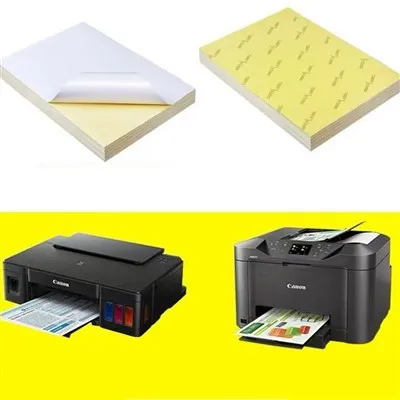
If you’re a teacher spending your own money on index cards that warp if you so much as sneeze near a cup of coffee, or a homeschool parent trying to keep track of 10 different learning tools for three kids, the short answer is yes—this isn’t just a gimmick. But let’s get into the science, the practical use cases, and why more educators are switching to self-adhesive printing paper instead of traditional educational supplies, especially now that many classrooms are mixing in-person and digital learning.
First, let’s break down what makes self-adhesive printing paper different from regular copy paper or even sticker paper. Most self-adhesive paper is made with three core layers: a printable face stock (usually matte, semi-gloss, or glossy paper or vinyl), a pressure-sensitive adhesive layer that activates when you apply firm pressure, and a release liner that protects the adhesive before it’s used. For education, the face stock is the most important part. Unlike cheap label paper that’s too thin and tears if you try to write on it with a wet erase marker, educational-grade self-adhesive face stock is thicker, coated to resist smudging from gel pens, crayons, and whiteboard markers, and some even have a slight texture that feels familiar to kids who’ve used standard construction paper for years.
I remember testing this with a 4th grade STEM teacher from a Chicago public school last year. She’d been trying to make periodic table flashcards for her students on cardstock, but every time a student accidentally spilled water on their desk, three or four cards curled so bad they couldn’t read the atomic number. We tested our matte white educational self-adhesive sheets, which have a 10pt face stock (that’s about as thick as a standard greeting card) and a water-resistant coating. The teacher printed the flashcards, cut them to size, and when a student knocked over a bottle of glue later that week, the cards only had a tiny smudge that wiped right off with a dry cloth. That’s the kind of durability traditional supplies just can’t match.
Now, let’s talk about use cases, because this is where self-adhesive printing paper really shines, especially for different age groups and learning needs. For elementary school, the most popular use is custom flashcards, but it goes way beyond that. Last month, I connected with a special education teacher in Texas who uses our matte vinyl self-adhesive sheets to make sensory labels for her classroom. She prints large, bold words with simple images (like a picture of a crayon next to the word “art”) and uses the adhesive side to stick them on storage bins, desks, and even bathroom doors. For non-verbal students or students with dyslexia, these labels act as visual cues that help them navigate the classroom independently. The vinyl material is also scratch-resistant, so it can handle being pulled off and repositioned a few times, which is perfect for young kids who like to rearrange their learning space.
Middle and high school educators love self-adhesive printing paper for hands-on project materials. A high school biology teacher in Detroit told me he used to spend $200 a year on construction paper, poster board, and glue sticks for his cell model projects. This year, he used our semi-gloss self-adhesive sheets to print cutouts of organelles, print labels, and even print the background of a cell membrane directly on the paper. The adhesive let his students stick the organelles to a piece of cardstock without using messy glue, and when projects were done, the students could take the labels off and stick them in their notebooks for study guides. He said this cut his project prep time in half and saved his school about $150 that semester. For history classes, self-adhesive paper works great for timeline projects—you can print each event on a separate strip of paper, use the adhesive to stick them to a long roll of butcher paper, and if you make a mistake, you can reposition the strip without tearing the whole timeline.
Higher education isn’t left out either. University study centers use our printable self-adhesive wall decals to create custom study guides that students can remove when they’re done. A pre-med program at a Midwestern university started using our white vinyl sheets to make anatomy labels for practice models. Instead of painting or gluing paper labels that fall off after a few uses, they print the labels on the self-adhesive sheets, stick them to the model, and when they need to practice a different set of muscles, they just peel off the old labels and apply new ones. This has cut down on the cost of replacing models and labels drastically over the past two years.
But here’s the part that a lot of people don’t ask about: is self-adhesive printing paper safe for kids and classroom use? As a supplier, safety is non-negotiable. All our educational self-adhesive sheets are tested to meet ASTM D-4236 standards for non-toxic art materials, which means they’re free of lead, phthalates, and other harmful chemicals that can be a risk for young kids who might chew on paper or put it in their mouths. The adhesive is also acid-free, so it won’t discolor or damage surfaces like desks, textbooks, or laminates when you remove it. We did a test last year where we left a self-adhesive label on a student desk for 30 days, and when we peeled it off, there was no sticky residue left, no discoloration on the desk’s surface. That’s a big deal—old cheap adhesive products can leave sticky gunk that takes hours to clean off, but our education-grade adhesive is formulated specifically for easy, residue-free removal.
Now, let’s address some of the common misconceptions about self-adhesive printing paper for education. The first is that it’s more expensive than regular cardstock. If you’re buying a single sheet, it might cost a few cents more, but when you factor in durability and versatility, it’s actually a better long-term investment. A pack of 100 standard index cards costs about $5, but they tear, warp, and get ruined after a few uses. A pack of 100 8.5×11 educational self-adhesive sheets costs about $12, and you can cut them into flashcards, labels, project pieces, or any size you need. That’s 400+ flashcards from one pack, which works out to about 3 cents per flashcard—cheaper than pre-made index cards, and you can customize them exactly to what your students need, instead of buying pre-made sets that might not match your lesson plan.
Another misconception is that you need a fancy printer to use self-adhesive printing paper for educational materials. No—standard inkjet or laser printers work perfectly, as long as you use the right type of paper for your printer. We actually sell a specific line of self-adhesive paper designed for classroom printers, with a coating that prevents smudging on inkjet printers and resists toner fading on laser printers. We even have a free guide for teachers that tells them exactly how to load the paper, what settings to use, and how to avoid jams—most of the issues people have are just from loading the paper wrong, and it’s an easy fix.
I’ve seen firsthand how this product transforms learning environments. Last year, I visited a small homeschool co-op in rural Ohio that had 12 kids from ages 5 to 12. Their old learning materials were worn out, and they couldn’t afford new textbooks or supplies every month. The mom who runs the co-op bought a pack of our self-adhesive sheets and started making custom learning tools: alphabet stickers for their reading corner, math fact flashcards, and even custom map labels for their geography lessons. Six months later, she emailed me saying that the kids were more engaged than ever, and they’d cut their supply budget by 75%. That’s the kind of impact I didn’t expect when I first started selling this product.
Of course, it’s not a one-size-fits-all solution. If you’re looking for something that will hold up to repeated heavy washing (like labels for classroom laptops or water bottles), the vinyl version is better than matte paper. If you’re making temporary flashcards that will be used for a week and discarded, the matte paper is perfect and cheaper. We always work with educators to figure out which type of self-adhesive paper is right for their specific needs, instead of pushing a one-size product.
I’ll be honest: when that part-time graphic designer first emailed me, I thought she was looking for a cheap sticker paper to make little fun decals for her students. But that conversation led us to develop a whole line of education-specific self-adhesive printing paper, and we’ve worked with thousands of teachers, homeschool parents, and curriculum designers since then. The feedback we get is consistent: this product isn’t just a replacement for old supplies—it’s a tool that lets educators customize learning to meet their students’ unique needs, without breaking the bank.
If you’re a teacher, administrator, homeschool parent, or curriculum designer who’s tired of supplies that don’t hold up, or you need custom educational materials that fit exactly what your students are learning, self-adhesive printing paper is worth considering. It’s durable, affordable, safe, and versatile enough to use for every part of your lesson plan, from flashcards to project materials to classroom labels.
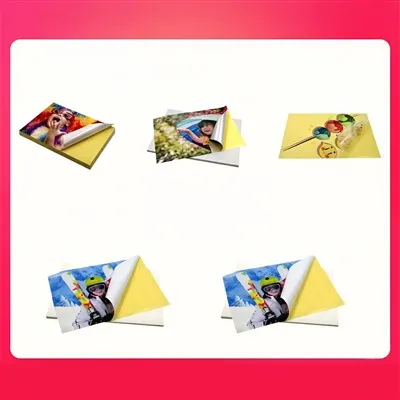
We work with K-12 schools, colleges, homeschool co-ops, and education suppliers, so whether you need a small pack for your own classroom or a bulk order for a whole school district, we can help. If you’re ready to stop wasting money on supplies that tear, warp, or leave sticky messes, and start using a product that makes lesson planning easier and learning more engaging, reach out to us to discuss your needs. We can send free samples so you can test them in your classroom, answer any questions you have about printing or use, and help you find the right self-adhesive paper for your specific educational projects.
Self-adhesive Printing Paper References
- American Society for Testing and Materials. (2020). Standard Practice for Evaluation of Art Materials and Their Assemblages for Health Effects (ASTM D-4236). ASTM International.
- National Education Association. (2022). K-12 Classroom Supply Cost Report. National Education Association.
- Centers for Disease Control and Prevention. (2021). Safe School Environments: Cleaning, Sanitization, and Disinfection Guidelines. U.S. Department of Health and Human Services.
- Printable Resources Association. (2023). Self-Adhesive Print Media for Educational Use: Durability and Safety Standards. Printable Media Industry Guide.
- National Home Education Research Institute. (2022). Homeschool Supply Expenditure Trends and Cost-Saving Strategies. NHERI Research Report.
Nanjing Green Label Printing Co., Ltd.
We are one of the most professional self-adhesive printing paper manufacturers and suppliers in China, also support customized service. We warmly welcome you to wholesale high quality self-adhesive printing paper at competitive price from our factory. For pricelist and quotation, contact us now.
Address: No. 116-3 Suyuan Avenue, Jiangning District, Nanjing
E-mail: greenlabel@126.com
WebSite: https://www.chinalabelprint.com/
