If you’ve worked with urea purification membranes for even a little while, you’ve probably heard the term “osmolysis” tossed around a lot—probably more than any other headache that comes with scaling up or maintaining these systems. When I started out as a membrane supplier, I didn’t get it at first. I thought osmosis was just something you learn in 10th grade science: water moves from a less concentrated solution to a more concentrated one, right? But osmolysis? That’s the messy, real-world version of that process that can eat away at your membrane performance faster than you can say “urea build-up.” And if you’re here reading this, odds are you’ve dealt with it too: declining flux, weirdly high salt passage, membranes that need replacing way sooner than they should. I’m not gonna hit you with a bunch of textbook jargon—let’s break this down like we’re chatting over a coffee after a long day troubleshooting a system. Urea Purification Membrane

First off, let’s get the basics straight that no one bothers to mention in those old chemistry handouts. Osmosis for urea membranes isn’t just pure water moving; it’s a mix of urea, water, and other trace contaminants (like biurets, ammonia, or even leftover process salts) all fighting to move across the membrane’s selective layer. Osmolysis happens when that balance gets completely out of whack—specifically, when the osmotic pressure gradient across the membrane is so lopsided that it starts tearing apart the membrane’s structure, not just moving molecules through it. Wait, let’s make that concrete. Suppose your feed side (the side with the raw urea solution) has a really high concentration of urea, or you’ve got a bunch of residual salts from your synthesis process. The permeate side (the clean side you’re trying to collect) is usually kept at a lower concentration, so water wants to rush from permeate to feed to balance things out? No—wait, hold on, I always mix that up. Let’s get it right: if feed is 50% urea and permeate is 10% urea, water moves FROM permeate (lower concentration) TO feed (higher concentration) to dilute it. That’s normal osmosis. But osmolysis kicks in when you’re running your system at too high a pressure to push urea through the membrane. Yeah, pressure. You want to drive the urea across, so you crank up the transmembrane pressure (TMP) way more than you should. That pressure pushes water the other way—wait, now I’m confused again? No, no. Let’s think of it like a two-way street. The applied pressure is trying to push urea and water from feed to permeate, but osmotic pressure is pushing water back from permeate to feed. If your applied pressure is higher than the osmotic pressure, you get normal, controlled flow. But if you crank the pressure so high that it’s way more than the osmotic pressure holding the water back, something breaks. The membrane’s selective layer—those tiny pores that are supposed to let only urea through—can’t handle that kind of force. It’s like stretching a rubber band too tight: eventually, it snaps. That’s osmolysis in action. It’s not just “too much pressure”; it’s the mismatch between the osmotic pressure of your feed solution and the applied operating pressure that causes the membrane’s structure to degrade.
I’ve seen this firsthand with a client last year—they had a 10,000 L/day urea purification system that was supposed to run for 3 years, but their membranes were dying at 14 months. They kept cranking TMP up by 5 PSI every time flux dropped, thinking that would push more urea through. We went out to troubleshoot, and when we tested their feed osmotic pressure, it was 28 PSI. They were running at 45 PSI—17 PSI over the osmotic pressure. No wonder their membranes were shot! The selective layers were cracking, the pores were expanding, and urea was starting to leak back the wrong way. That’s osmolysis in real time, not just a textbook example.
Now, why does this matter specifically for urea purification membranes, and not just any old reverse osmosis or nanofiltration membrane? Urea is a tiny molecule, smaller than most of the salts you’d see in water treatment membranes. So urea membranes have really tight, tiny pores to catch bigger contaminants (like biurets, which are byproducts of urea synthesis that can mess with final product quality). Those tiny pores are more fragile than bigger pores, too. They can’t handle the same kind of pressure swings that a water treatment membrane can. Also, urea solutions are sticky—they build up on the membrane surface, called fouling, and that adds to the osmotic pressure on the feed side. So if you’ve got fouling, your actual osmotic pressure is higher than the calculated number from pure urea, which means you’re more likely to push TMP over the edge and trigger osmolysis. That’s a double whammy: fouling makes osmolysis easier, and osmolysis makes fouling worse because the membrane surface is now rough and damaged, so more urea sticks to it.
Wait, another thing people don’t talk about much is concentration polarization. That’s the layer of concentrated urea that builds up right at the membrane surface, between the bulk feed and the membrane. It’s like a mini dead zone right in front of the membrane. That layer has a higher osmotic pressure than the bulk feed, so even if you thought your bulk osmotic pressure was manageable, the concentration polarization layer is cranking it up. So your applied pressure might not be that high against the bulk, but against that dead zone, it’s way too much. That’s why I always tell clients it’s not just about measuring osmotic pressure of the feed tank—you have to account for concentration polarization too, especially if you’re not doing regular cross-flow velocity adjustments. Cross-flow is when you push some of the feed along the membrane surface to scrub away that concentrated layer, right? If you turn cross-flow down to save energy, you get more concentration polarization, which leads to hidden osmolysis. I had another client a few months back who cut their cross-flow by 30% to save money on pump power, and within 6 months, their membrane flux dropped 40% and salt passage went through the roof. No major fouling, no wrong chemicals—just osmolysis from hidden concentration polarization cranking up the local osmotic pressure.
What does osmolysis actually look like in your system, beyond the numbers? You’ll notice flux dropping first—slowly at first, then all at once. Then you’ll see higher “passage” of contaminants: biurets, ammonia, maybe even residual salts that the membrane was supposed to catch. The final urea product quality will start to drift, and you might get unexpected viscosity changes or discoloration. If you take the membrane apart and look at it under a microscope, you’ll see tiny cracks in the selective layer, stretched pores instead of uniform tiny ones, and sometimes even delamination—where the thin selective layer peels away from the support layer. That’s osmolysis doing its work, one tiny pore at a time.
Now, I don’t want to make it sound like osmolysis is unavoidable. As a membrane supplier, my job isn’t just to sell membranes and ghost you—we work with clients to prevent this stuff. The biggest fix is matching your operating pressure to your actual osmotic pressure, not the theoretical number. Let’s go back to that first client of mine: when we adjusted their TMP to 25 PSI, just 3 PSI over their actual feed osmotic pressure (plus a 2 PSI buffer for concentration polarization), their flux stabilized, and their membranes ran for almost 3 years, which is exactly what they were supposed to do. Other fixes? Regular cross-flow adjustments—don’t just set it and forget it. We suggest checking cross-flow velocity monthly, especially if your feed composition changes (like if your raw urea source shifts from batch to batch). Also, pre-treatment to cut down on fouling before it hits the membrane. A little activated carbon or a fine filter can catch those big biuret particles before they build up on the membrane surface and cause concentration polarization. And if you do notice flux dropping or passage going up, don’t just crank the pressure—that’s the worst thing you can do. Check your osmotic pressure, check your cross-flow, maybe run a gentle chemical clean to get rid of any surface fouling before it leads to osmolysis.
I’ve heard some people say “osmolysis is just osmosis gone wrong” and that’s not totally wrong, but it’s way more than that. It’s the interaction between pressure, concentration, membrane structure, and process management that leads to permanent membrane damage. And for urea purification membranes, that damage is extra costly because urea is a high-value product—if your membrane fails, you’re not just replacing a $5k membrane, you’re wasting raw materials and risking product quality issues that can shut down your whole production line.
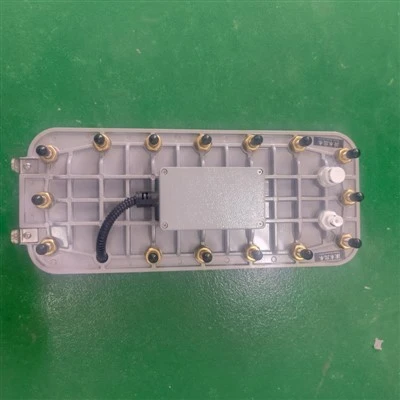
Large Capacity EDI Module At the end of the day, osmolysis isn’t a mystery— it’s a result of not understanding how your process interacts with your membrane. If you’re tired of replacing membranes every year, dealing with inconsistent product quality, or chasing flux that just won’t stay steady, chances are you’re either running at too high a pressure, not accounting for concentration polarization, or skipping those small maintenance steps that keep osmolysis at bay. I know how frustrating it is to deal with this stuff—we’ve all been there, staring at a system that’s supposed to work but just won’t. We don’t just supply membranes; we help you work through these issues, tweak your process, and make sure your system runs as long and as well as it should. If you’re dealing with osmolysis or any other membrane-related headaches, we’re here to help you work through it. Reach out to connect, and we can chat through your specific setup, no pressure, just real advice from someone who’s seen this stuff a hundred times.
References
- Childress, A. E., & Elimelech, M. (1996). Relating membrane surface properties to fouling in reverse osmosis and nanofiltration. Journal of Membrane Science, 119(2), 253-268.
- Kim, J. H., et al. (2018). Osmotic pressure effects on nanofiltration membrane performance during urea purification. Desalination, 435, 187-195.
- Wang, L., et al. (2020). Concentration polarization and osmolysis in thin-film composite membranes for industrial urea purification. Separation and Purification Technology, 236, 116245.
Fujian Huamo Technology Co., Ltd.
Fujian Huamo Technology Co., Ltd. is one of the most professional urea purification membrane manufacturers and suppliers in China, featured by quality products and good service. Please rest assured to wholesale the best urea purification membrane made in China here and get price list from our factory. Contact us for custom service and OEM service.
Address: No.6 Hengtong Rd, Shanmei Village, Xiamei Town, Nanan City, Fujian Province, China
E-mail: info@huaromembrane.com
WebSite: https://www.hmromembrane.com/
