As a supplier of thermal overload protectors (TOPs), I get asked a lot of technical questions from electricians, equipment manufacturers, and facility managers. One question that comes up more than others is: “Do thermal overload protectors have a lock-out function?” It makes sense—when a motor overheats, the last thing you want is the unit restarting unexpectedly while a technician is working on it. Lock-out functionality, often called positive lock-out or manual reset lock-out, is a critical safety feature that directly addresses that risk. But before diving into specifics, let’s ground this in what a thermal overload protector actually does, because not all TOPs are built the same. Thermal Overload Protectors
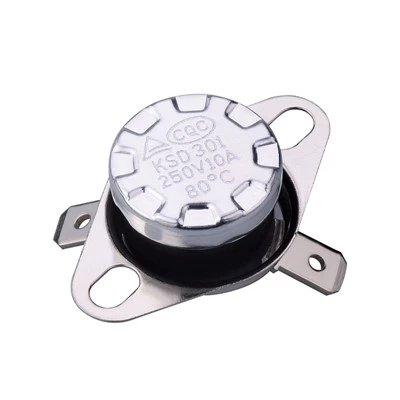
First, a quick recap: Thermal overload protectors are safety devices designed to prevent electric motors (and other electrical components) from overheating and failing prematurely, or even catching fire. They work by sensing the temperature of the motor’s windings or the surrounding ambient air. When the temperature exceeds a pre-set threshold—usually caused by overloading, locked rotors, or insufficient cooling—the TOP activates, cutting power to the motor to stop the heat buildup. The core function is thermal protection, but reset methods vary wildly, and that’s where lock-out comes in.
When someone talks about a lock-out function in a thermal overload protector, what they’re referring to is a reset mechanism that requires intentional, manual action to re-energize the device after a trip—not automatic reset. Automatic reset TOPs will re-engage power as soon as the component cools down, which is convenient for simple applications like small household appliances, but it’s a major safety hazard in commercial and industrial settings. Imagine a 10-horsepower conveyor motor tripping overnight because of a jam. If it automatically resets at 2 a.m., and a maintenance worker is underneath the conveyor clearing the jam the next morning, that’s a catastrophic risk. That’s exactly why many top-tier TOPs, including most of the ones we supply, are built with manual reset lock-out functionality as a standard or optional feature, depending on the application.
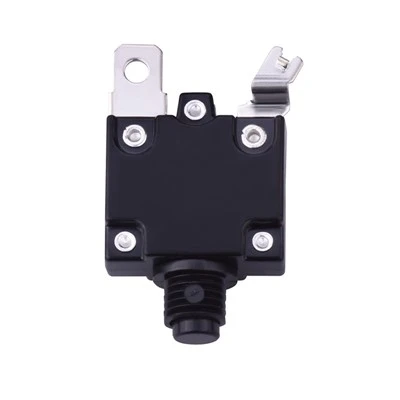
Let’s break down how this lock-out mechanism works. Most manual reset TOPs have a small, raised button on the casing. When the device trips, that button pops up in a visible position to signal the device is tripped. To reset it, you have to physically press that button in. Importantly, this is not a momentary switch that will re-engage power immediately. Some designs also include a small latch that holds the device in the tripped state until a technician presses the button firmly, ensuring that power cannot be restored accidentally. That’s the lock-out part: it creates a barrier between the tripped state and the re-energized state, so you can’t trigger power without conscious, intentional action. This is aligned with OSHA’s lockout/tagout (LOTO) standards, which require workers to isolate energy sources during maintenance to prevent unexpected startup.
But here’s a key point to clarify: Not all thermal overload protectors have this lock-out function. Cheaper, low-cost TOPs designed for non-critical applications (like small power tools or portable fans) almost always use automatic reset. That’s because those devices are intended for occasional, simple use, and the risk of unexpected restart is lower in consumer settings. For example, a handheld drill that overheats will cool quickly after you set it down, so an automatic reset is convenient for the next use. But for industrial motors, HVAC systems, refrigeration compressors, and other applications where workers may access the equipment during troubleshooting, lock-out is non-negotiable. It’s a distinction we emphasize to our customers every time we quote a TOP: match the reset type to the application’s safety requirements.
Another common confusion is between thermal overload protectors and circuit breakers, or between the lock-out function of TOPs and other safety devices like contactors. A thermal overload protector is a sensing device, usually mounted on the motor or inside the motor itself, while a contactor is a switch that controls power flow. Some systems combine a TOP with a contactor to provide overload protection plus a clear lock-out point at the contactor for maintenance, but the TOP itself can also have its own lock-out feature. That dual protection is what many industrial clients prioritize: the TOP senses heat directly at the source, and its manual reset ensures you can’t bypass protection accidentally.
We’ve seen firsthand the consequences of choosing a TOP without lock-out functionality for the wrong application. A few years back, we worked with a small packaging plant that installed cheap automatic reset TOPs on their conveyor motors. One motor tripped after a package jammed, and it automatically reset 20 minutes later while a maintenance tech was reaching into the conveyor to clear the jam. The startup caught his arm, resulting in a significant injury. The plant was cited for violating OSHA LOTO standards, and they had to replace all their automatic reset TOPs with manual reset lock-out models. That’s a story that sticks with us, and it’s why we make lock-out-equipped TOPs a top recommendation for any industrial or commercial customer dealing with equipment that requires routine maintenance.
What about situations where lock-out is not required? For very low-power, non-critical applications—like a kitchen exhaust fan in a residential setting, or a small aquarium pump—automatic reset TOPs are acceptable. The risk of workers being present during a trip is low, and the convenience of automatic reset makes sense. We always advise customers to evaluate their specific safety protocols when choosing between automatic and manual reset TOPs. If the equipment is locked or guarded during normal operation, if only authorized personnel access it, or if the consequences of a trip are mild, automatic reset may be fine. But for any application where someone could be in close proximity to the equipment during maintenance, lock-out is essential.
There are also variations in lock-out functionality to suit different needs. Some TOPs have what’s called a “trip-free” lock-out design, meaning you can’t hold the reset button down to bypass the overload protection. That’s a critical feature that prevents workers from defeating the device when it trips, which would defeat the entire purpose of the thermal overload protector. We’ve encountered customers who try to tape reset buttons down on automatic reset TOPs to get around tripping, which is a dangerous practice. Manual reset lock-out designs eliminate that risk because you have to reactivate the device only after fixing the underlying issue that caused the trip, and you can’t bypass the protection without intentionally resetting it.
Another point to consider is certification. Many of the TOPs we supply are certified by organizations like UL, CE, and CSA, which have specific requirements for lock-out functionality in safety devices for electrical equipment. For example, UL 508, the standard for industrial control equipment, requires that overload protection devices for motor applications have a manual reset option when intended for use in commercial and industrial settings. That’s a key assurance for our customers, as it means the TOP meets national and international safety standards, reducing liability and compliance risks.
We also get asked about how to test the lock-out function of a thermal overload protector. It’s a simple, but important step in equipment maintenance. To test it, you can heat the TOP past its trip threshold (either by running the motor until it overheats, or using a heat gun to simulate overheating) and confirm that after tripping, the reset button is extended and requires firm pressure to press. You should also verify that power is not restored when the button is pressed, and that you have to wait for the device to cool down first (or follow manufacturer instructions) before resetting. If the button pushes in easily and power comes back on immediately, the lock-out function is not working, and the TOP needs to be replaced.
For our customers, we not only supply lock-out equipped thermal overload protectors, but also provide guidance on how to integrate them into their safety systems. That includes helping identify which applications require lock-out, how to test the devices regularly, and how to align their use with OSHA and other safety regulations. We understand that safety isn’t just about the device itself—it’s about how it fits into your operations, which is why we’re always available to work with clients to find the right TOP for their specific needs.
If you’re in the market for thermal overload protectors, whether for industrial motors, HVAC systems, or any other application, and you have questions about lock-out functionality, or need to source certified, reliable TOPs for your equipment, we’re here to help. We can walk you through the different reset options, review your application’s safety requirements, and provide samples or quotes to meet your needs. There’s no obligation—just a conversation to make sure you’re choosing the right safety devices to protect both your equipment and your workers.
Thermal Overload Protectors References
- Occupational Safety and Health Administration (OSHA). (2023). Lockout/Tagout of Energy Sources (29 CFR 1910.147).
- Underwriters Laboratories (UL). (2022). Standard for Industrial Control Equipment (UL 508).
- International Electrotechnical Commission (IEC). (2021). Low-voltage Switchgear and Controlgear – Part 1: General Rules (IEC 60947-1).
- IEEE Industry Applications Society. (2020). “Thermal Protection for Rotating Machinery: Best Practices for Industrial Applications.” IEEE Transactions on Industry Applications.
Yueqing Ganen Electronic Technology Co., Ltd.
As one of the most professional thermal overload protectors manufacturers and suppliers in China, we also support customized service. Please feel free to wholesale advanced thermal overload protectors in stock here from our factory. Welcome to contact us for quotation.
Address: No.6 yonghe 3rd Road, Chengdong Industrial Functional Zone, Chengdong Street, Yueqing City, Wenzhou City, Zhejiang Province, China.
E-mail: daiaohui@163.com
WebSite: https://www.ganensj.com/
