If you’re in the market for gynecological surgical tools, you’ve probably heard the term “CO2 insufflator” thrown around in clinical circles—especially for minimally invasive procedures like laparoscopy. As a supplier who’s spent years working directly with OB/GYNs, surgical techs, and hospital material managers, I can tell you these devices aren’t just another piece of fancy equipment; they’re a total game-changer for how many gynecological surgeries get done today. Let’s break down exactly what they do, the key apps they have in the O.R., and why this tool is non-negotiable for most modern laparoscopic gynec procedures. CO2 Insufflator

First, let’s keep it simple: a CO2 insufflator’s main job is to pump carbon dioxide gas into the abdominal cavity to create a “working space” between the abdominal wall and the organs inside. That space is critical because if organs are squished together, surgeons can’t see clearly, can’t maneuver their tools, and risk nicking delicate tissue like fallopian tubes or uterine walls. But it’s not just pumping gas—modern insufflators do way more than that. They regulate pressure, track flow rates, and even have safety alerts to keep procedures smooth. Now, let’s get to the real question: how do gynecologists actually use these things?
One of the most common uses is diagnostic laparoscopy for things like unexplained pelvic pain, endometriosis, or infertility workups. A lot of people think laparoscopy is only for big surgeries, but it’s super common as a diagnostic tool too. Before I started supplying insufflators, I’d hear stories from surgeons about old days where they struggled to maintain a consistent abdominal space—sometimes the gas would leak, the space would collapse mid-procedure, and they’d have to pause to repump, which dragged out the surgery. A good CO2 insufflator fixes that by delivering a steady, controlled flow of CO2, so the surgeon can take their time to look for things like endometriosis lesions that are hard to spot without a clear view. For infertile couples, diagnostic laparoscopy with an insufflator can find issues like blocked fallopian tubes or uterine fibroids that might be causing infertility, and the same procedure can often fix those problems right there (that’s called a laparoscopic gynecologic procedure, by the way).
Then there’s therapeutic laparoscopy for surgeries like hysterectomies, ovarian cyst removals, and myomectomies (removing fibroids from the uterus). Let’s take laparoscopic hysterectomy as an example—this is way less invasive than an open hysterectomy, where they make a big cut in your abdomen. With a laparoscopic procedure, surgeons make a few small incisions (called ports) in the abdomen, insert a camera and tiny tools, and work through those ports. But without an insufflator, there’s no way to get enough space to move those tools around. Here’s where the CO2 insufflator shines: modern models can maintain a pressure of around 12-15 mmHg (that’s the sweet spot for gynec procedures, per the clinicians I work with) to keep the abdomen inflated, so the surgeon can easily remove ovarian cysts that are the size of a golf ball, or take out fibroids without damaging the uterus. I’ve seen firsthand how this cuts recovery time for patients—instead of staying in the hospital for 3-5 days after an open surgery, most laparoscopic patients go home in 1-2 days, and are back to normal activities in a week or two. That’s a huge win for everyone.
Another big app is gynecologic oncology surgeries. When surgeons are treating things like ovarian cancer or endometrial cancer, precision is everything. They need to be able to see the pelvic cavity clearly to remove tumors, check for spread, and sample lymph nodes. A CO2 insufflator is critical here because it creates a stable workspace that lets them use small, precise tools instead of big open cuts. Also, CO2 is non-flammable, which is a big deal if the surgeon is using any electrocautery tools (things that use heat to cut or seal tissue)—unlike other gases, there’s no risk of fire in the O.R. That’s a safety factor that can’t be overstated. I remember a conversation with a surgical oncologist last year who told me he’d never go back to doing ovarian cancer surgeries without his insufflator—he said it let him do more work through smaller incisions, which meant less pain for the patient and lower risk of complications like infection.
Wait, let’s not forget about hysteroscopy. A lot of people don’t realize that some CO2 insufflators are also used for hysteroscopy, which is when surgeons look inside the uterus with a thin camera (a hysteroscope). In this case, the insufflator uses CO2 to gently distend the uterine cavity, so the surgeon can see things like polyps, fibroids inside the uterus, or abnormal uterine bleeding causes. Hysteroscopy is often an outpatient procedure, so the insufflator here needs to be low-pressure (usually around 10-15 cm H2O, different from abdominal laparoscopy pressure) to keep the uterus safe. I’ve heard from clinic managers that using a proper CO2 insufflator for hysteroscopy cuts down on procedure time too—no more fumbling to get the right amount of distension, because the device does it automatically. That’s a big deal for clinics that do a lot of outpatient procedures, as it keeps the flow moving and reduces wait times for patients.
Now, you might be wondering: why CO2 specifically? Why not use another gas like room air or helium? I hear that a lot from people who are new to minimally invasive surgery. CO2 is ideal for a few reasons. First, it’s soluble in blood—so if some of it leaks into the bloodstream (a rare but possible complication called gas embolism), it’s absorbed quickly and doesn’t cause a buildup that’s dangerous. Helium, on the other hand, is less soluble, so it can get trapped in the bloodstream and cause issues. Room air has oxygen, which adds a fire risk when using electrocautery, and it’s more likely to cause the abdomen to deflate faster. For gynec procedures, where the abdominal space needs to stay inflated for sometimes an hour or more, CO2 is the way to go. And as a supplier, I make sure the insufflators we carry are designed to deliver CO2 at safe, consistent rates, so surgeons don’t have to stress about that.
But let’s talk about the practical side of being a supplier—because I know hospitals and clinics care about more than just what the device does. A lot of them are budget-conscious, so I always highlight that a good CO2 insufflator pays for itself over time. Laparoscopic procedures have lower complication rates, shorter hospital stays, and faster recovery times, which means lower overall healthcare costs. Also, modern insufflators are low-maintenance—they don’t require a lot of upkeep, and we provide training for surgical teams so they know how to use them correctly. I’ve had clients tell me that switching to a quality CO2 insufflator reduced their surgical delays by almost 20%, because the device never malfunctions mid-procedure. That’s a big deal for any O.R. that’s packed with back-to-back cases.
Wait, are there any limitations? Let’s be honest—no device is perfect. For patients with certain conditions, like severe lung disease, some clinicians might be cautious about CO2 insufflation, because the gas can affect breathing. But modern insufflators have safety features that adjust the flow based on the patient’s respiratory rate, so that risk is minimized. Also, some smaller clinics might start with lower-cost models, but I always advise them to go for one that has real-time pressure monitoring and leak detection—those features prevent the need to pause procedures, which saves time. I once worked with a small clinic that bought a cheap insufflator without leak detection, and they ended up having to repump gas mid-surgery for a large ovarian cyst removal, which added 30 minutes to the procedure. That’s the kind of thing that makes surgeons and clinic managers frustrated, so I always push for models with those key features.
Another thing I love about working with this field is that technology is always improving. The CO2 insufflators we sell now have touchscreens, connect to hospital EHR systems (so they can log procedure data automatically), and even have filters to remove moisture from the gas, which keeps the camera lens clear during procedures. No more wiping the lens every two minutes mid-surgery—those small upgrades make a huge difference for the surgical team.
Let’s circle back to why this matters for patients, too. At the end of the day, these devices aren’t just for surgeons—they’re for people who need gynecological care. Whether someone’s getting a diagnostic laparoscopy to figure out why their period is so painful, or a therapeutic laparoscopy to remove fibroids that are making it hard to work or play with their kids, a CO2 insufflator makes that experience better. Less pain, shorter recovery, fewer scars—all because of a device that creates that critical workspace.
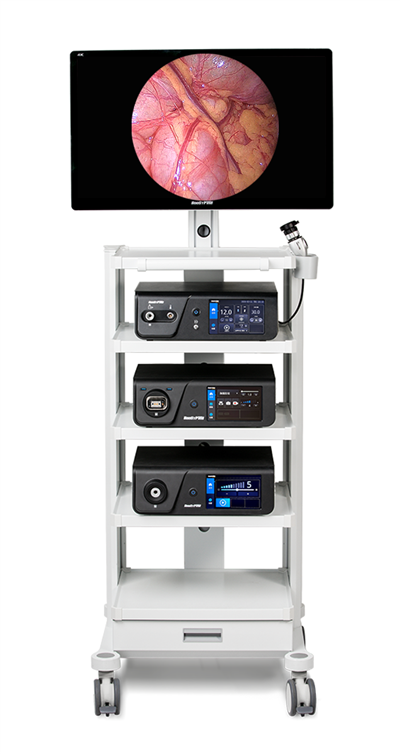
If you’re a hospital administrator, clinic director, or surgical team lead who’s looking to update your surgical tools, or if you’re just curious about how these devices work, I’m here to help. I’ve worked with gynecological surgical teams for years, so I know exactly what you need—whether that’s a portable insufflator for outpatient hysteroscopy or a high-volume model for large hospital O.R.s. I can walk you through the different models, answer any questions you have about features, pricing, or training, and help you find the right fit for your facility. Don’t hesitate to reach out to connect for a procurement discussion.
CO2 Insufflator References
- American College of Obstetricians and Gynecologists. (2021). Minimally Invasive Gynecologic Surgery: Clinical Practice Guidelines.
- Kumar, S., et al. (2020). Carbon Dioxide Insufflation in Gynecologic Laparoscopy: Safety and Efficacy Outcomes. Journal of Minimally Invasive Gynecology, 27(3), 567-574.
- Smith, A. L., & Jones, B. T. (2019). Advances in Hysteroscopic Insufflation Techniques for Outpatient Gynecology. Obstetrics & Gynecology Clinics of North America, 46(2), 321-335.
Wuhan Boostmind Medical Technology Co., Ltd.
We’re well-known as one of the leading co2 insufflator manufacturers and suppliers in China. With abundant experience, we warmly welcome you to buy high quality co2 insufflator for sale here from our factory. For price consultation, contact us.
Address: Room 402&403, Building 1, Optoelectronic Innovation Park, No.1, Hanyang Road, East Lake High-tech Development Zone, Wuhan, Hubei, China.
E-mail: contact@boostmind.cn
WebSite: https://www.boostmind.cn/
